

INGREDIENTS
Canola oil*, grassfed tallow*, avocado oil*, food grade sodium hydroxide (none remains in final product), burdock root*, castor oil*, coconut oil*, raw honey*, jojoba oil*, amla berry*, comfrey leaf*, free range egg yolk*, yellow brazilian clay*, yucca root*, white kaolin clay*, camellia seed oil*, argan oil*, fresh aloe vera gel*, purple brazilian clay*, essential oils of lavender, rosemary and peppermint
*organic / wildharvested
ABOUT BARE ROOT HAIR BARS
These are formulated not only as an alternative to conventional shampoo, but as an alternative to other lye-based shampoo bars. Why? The formulation is entirely based around preserving natural sebum balance. Rather than strip away only to condition with ingredients that cause build up over time, these bars help to maintain an equilibrium which means, once the scalp adjusts, less frequent washing.
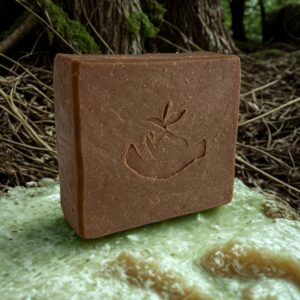
These bars are utterly packed with botanicals that contribute to both cleansing and conditioning properties. A high clay content, of largely Brazilian clays (which boast a skin-friendly pH), helps prevent residues from building up. Because of the clay content, bars will leave a brown color on the soap dish which can be easily washed off.
Note: if you are switching from silicone and surfactant based hair routines to these bars, there can be a serious adjustment period. To speed up the process, you can do a hair detoxification mask with bentonite clay, apple cider vinegar and water.
DIRECTIONS
Comb hair well before shower. Ensure hair is thoroughly wet before washing. Rub bar directly on hair or between your hands and lather up, focusing on the roots. It is important to wash twice: the first time will clean the hair, the second round will impart the conditioning oils. The lather will continue to build as you are washing and you will need less the second time. Rinse very well! The rinsing should take longer than the washing.
“CONDITIONING” THE HAIR
Following your wash with a vinegar rinse is the traditional practice with natural shampoo bars, especially for those with medium length or long hair. For finer hair: a 1:9 vinegar dilution, for coarser hair: a 1:7 vinegar dilution. This rinse resets the pH of the scalp and strands, while additionally preventing buildup for smooth and shiny hair.
There are three elements to close the cuticle after washing for silky soft hair: pH, temperature and botanicals.
For pH, instead of a vinegar rinse, you could brew a strong botanical infusion that included an acidic herb like hibiscus, rosehips, lemon peel or orange peel. If you have a water system where you can choose the pH, like the one from Alkaviva that we use, you can simply pour acidic water over your hair or brew herbs in acidic water to use as a rinse.
Temperature makes an enormous difference for the hair strands! A final cold rinse is perhaps even more effective than pH at closing the follicle.
Finally, brewing a strong infusion of hair-friendly herbs is a way you can tailor the outcome specifically to your hair’s needs. Burdock root, dandelion root, hibiscus and marshmallow root provide mucilage as a natural detangler. Rosemary is a classic herb that stimulates hair growth and reduces dandruff and scalp conditions. The list is endless. I wrote a short blog post about my six favorite hair rinse herbs.
For short hair, hair rinses aren’t really necessary.
THIS RECIPE IS EVER-EVOLVING. FEEDBACK IS VERY MUCH APPRECIATED!
Reviews
There are no reviews yet.